Book of the Day Posted Mar 10, 2016

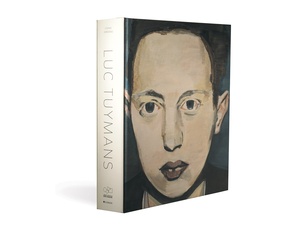
Book of the day > Luc Tuymans: Intolerance

Book of the day > Luc Tuymans: Intolerance. Ludion. “Belgian painter Luc Tuymans, one of the key figures in the 1990s revival of figurative painting, is also one of contemporary art's great history painters, tackling historical traumas and their representations in a restrained-though resolutely painterly-style and pale, muted palette. Far from accepting painting as obsolete or inadequate, throughout his career Tuymans has used painting to engage with the most painful, urgent subjects of the past and present, from the aftermath of the Second World War and Belgium's colonial past to the War on Terror. "I still indulge in the perversity of painting," said Tuymans, "which remains interesting." Luc Tuymans: Intolerance, published to accompany a major retrospective at the Qatar Museums in Doha (the artist's first show in the Gulf region), surveys Tuymans' work from the past 25 years. Comprehensive and richly illustrated, it contains more than 800 reproductions: studies, archival material and installation photographs, as well as 60 drawings and 100 paintings (including Tuymans' new body of work, The Arena, created for the exhibition). Also included are texts by Jan Avgikos, Nicholas Cullinan, Jenevive Nykolak, Nicholas Serota and exhibition curator Lynne Cooke, offering new insights into Tuymans' oeuvre from the past three decades.”
 

Book of the Day Posted Mar 09, 2016

Book of the day > Walker Evans: Depth of Field

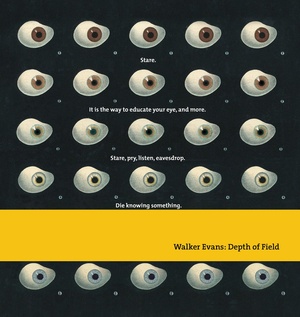
Book of the day > Walker Evans: Depth of Field. Prestel. “This resplendent volume is the most comprehensive study of Walker Evans’s work ever published, containing masterful images accompanied by authoritative commentary from leading photography historians.


The name Walker Evans conjures images of the American everyman. Whether it’s his iconic contributions to James Agee’s depression-era classic book, 'Let Us Now Praise Famous Men', his architectural explorations of antebellum plantations, or his subway series, taken with a camera hidden in his coat, Evans’s accessible and eloquent photographs speak to us all. This comprehensive book traces the entire arc of Evans’s remarkable career, from the 1930’s to the 1970’s. The illustrations in the book range from his earliest images taken with a vest pocket camera, to his final photos using the then new SX-70 because his regular equipment became too heavy to carry around. The book includes commentary from three of Evans’s longtime friends, photographers Alan Trachtenberg, Jerry Thompson and John T. Hill. Their insight and first-hand experience give depth to their critical writings on Evans’s work. In addition to offering a broad perspective on Evans’ work, the book also clarifies the photographer’s “anti-art” philosophy. Eschewing aesthetic hyperbole, Evans wanted his pictures to resonate with a wide audience. At the same time, his natural curiosity made him one of the most inventive photographers of all time. What these photographs and writings attest to is a huge and timeless talent, which came not from a camera, but from Evans’s uniquely hungry eye.”

Book of the Day Posted Mar 08, 2016

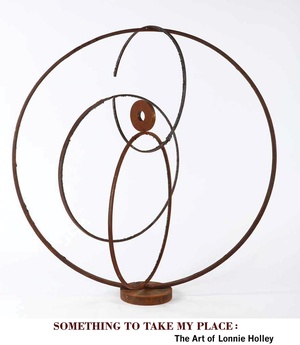
Book of the day > Something to Take My Place: The Art of Lonnie Holley

Book of the day > Something to Take My Place: The Art of Lonnie Holley. Halsey Institute of Contemporary Art, College of Charleston.” Lonnie Holley, acclaimed by The New York Times as “the Insider’s Outsider,” is best known for his assemblage sculptures incorporating natural and man-made materials, often cast off or discarded; he has recently also begun to make music, through the Dust-to-Digital label. Legendary for his environmental assemblage that spread over two acres of his property in Birmingham, Alabama—now destroyed—Holley scavenges and repurposes found objects in the service of a personal philosophy of renewal and rejuvenation. This is the first monograph on Holley’s work in more than a decade. Illustrated with reproductions of more than 70 of Holley’s sculptures, it provides a comprehensive overview of Holley’s art, life and philosophy, with essays by Mark Sloan, Leslie Umberger, Bernard L. Herman and an “as-told-to” autobiography recorded by noted oral historian Theodore Rosengarten.”


Book of the Day Posted Mar 05, 2016

Book of the day > Daisuke Yokota: Color Photographs

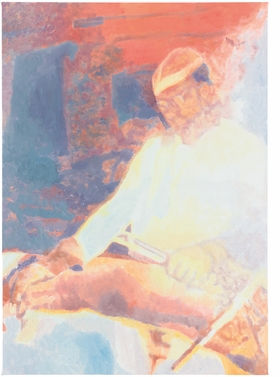
Book of the day > Daisuke Yokota: Color Photographs. Harper’s Books / Flying Books. “Illustrated with 83 images of the artist's abstract color photography, a body of work distinct from the black and white images for which he is known. Through means of darkroom experimentation, Yokota layers sheets of unused large format color film and applies unorthodox developing methods before scanning the results. The mixing and manipulation of the film's chemicals produces vibrant and liquescent compositions that create forms reminiscent of fractal geometry and telescope images of the cosmos.”

Book of the Day Posted Mar 04, 2016

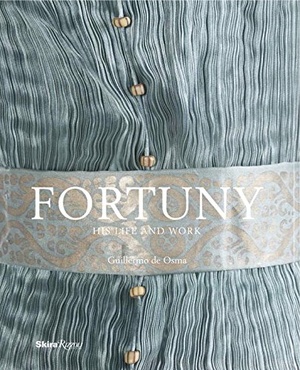
Book of the day > Fortuny: His Life and Work

Book of the day > Fortuny: His Life and Work. Skira|Rizzoli. “This comprehensive monograph captures the fashions, art, and fantasy of one of the world’s most original fashion designers. Mariano Fortuny is an exceptional figure in the history of art and design. Born in Spain and raised in Paris, he is most associated with Venice—he was often called the "magician of Venice"—where he lived and worked at the legendary Palazzo Fortuny until his death in 1949. Fortuny excelled not only in fashion, but also as a painter, printmaker, photographer, textile designer, set designer, lighting engineer, and inventor—all covered in-depth in the book. However, Fortuny’s creativity has had its most enduring legacy in the fashion world, and this comprehensive monograph includes much archival and previously unpublished material. Inspired by classical antiquity, Fortuny’s legendary designs were fashion’s first step toward modernity. His dresses featured finely pleated silks, often adorned with glass beads or similar objects, which flowed seductively over the female form, revealing its natural curves. His velvet capes were instantly popular, and the Delphos gown was favored by notable clients such as Eleanora Duse and Isadora Duncan. Fortuny’s designs remain the ultimate example of fashion as art and continue to inspire twenty-first-century designers.”

Book of the Day Posted Mar 03, 2016

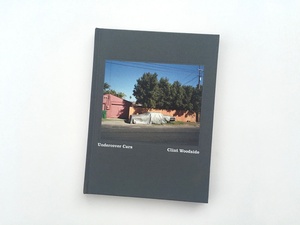
Book of the day > Clint Woodside – Undercover Cars

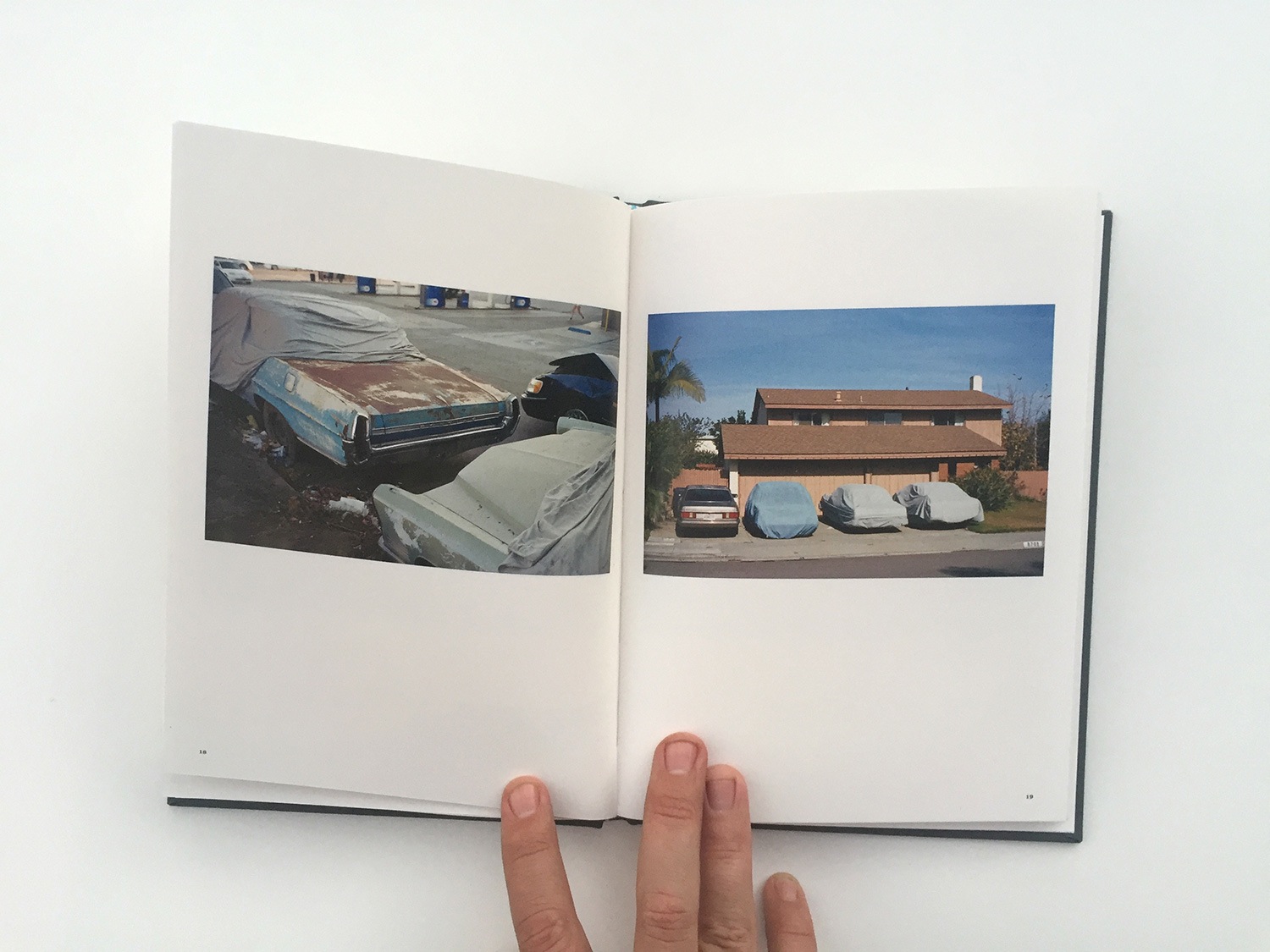
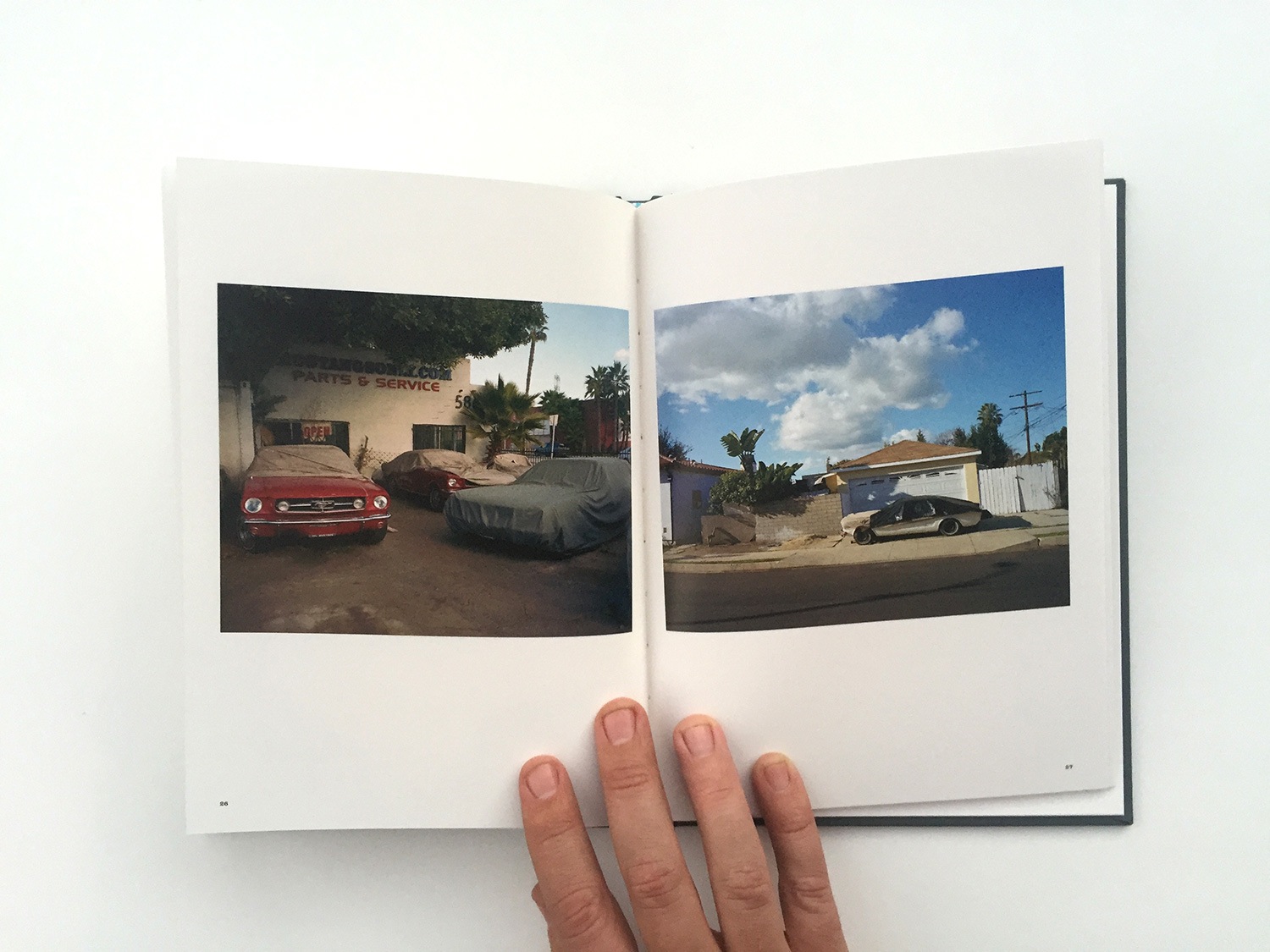
Book of the day > Clint Woodside – Undercover Cars. Kill Your Idols. Essay by Mike Slack. “What strikes me now, looking at this fresh new edit, is not the boring ubiquity of the subject matter – the deadpan Christo-like charm of all these tarps attached to all these automobiles (“hey, instant conceptual art!”) – but the manmade environments Woodside is showing us in the photographs, and the sense of walking-and-looking that the series implies. Never mind the covered cars; look at what surrounds them. the photos – mostly off hand, in various analog formats – are oddly alive with endearing residential architecture and everyday human habitation/habit (well-worn apartments and houses, painted garage doors, oil-stained driveways), and the familiar flora of Southern California (looming, disheveled palms; massive weird shrubs; dense, dark ficus trees; unruly ivy). The word “undercover” is especially apt here too, not only because “Clint Woodside” sounds like a character out of a classic LA film noir, but also because – in a strange twist – while the recurring subject of these pictures is “cars” (a quintessentially LA theme), the real subject remains hidden in plain sight: the intimate, everyday human narratives swirling around the cars. Woodside is just gathering evidence.  As a series, Woodside’s “undercover cars” loosely documents a place and a time but they’re also a record of his photographic obsession, a long-term attachment to a simple theme from which more complex themes can emerge and evolve.” – Mike Slack


Book of the Day Posted Mar 02, 2016

Book of the day > Sonia Delaunay

Book of the day > Sonia Delaunay. Tate. “Sonia Delaunay was one of the most important and fundamental artists of the early 20th-century Parisian avant-garde. With over 250 illustrations and groundbreaking essays, the book illustrates a long and varied career. This volume follows Delaunay’s painting from her early period in Paris, influenced by Fauvism, through her interest in abstractionism, collaborations with artists and poets, and explorations of color theory together with her husband, Robert Delaunay. Also represented is her work retranslating her experiments in painting into the realm of fashion as well as costume and set design. Delaunay continued to develop her interest in different media, creating mosaics, tapestries, and lithographs. Her late paintings and gouaches evoked a renewed interest in abstraction and color, marking her seminal role in the development of postwar abstract and applied art.”

Book of the Day Posted Mar 01, 2016

Book of the day > Surfing. 1778-2015

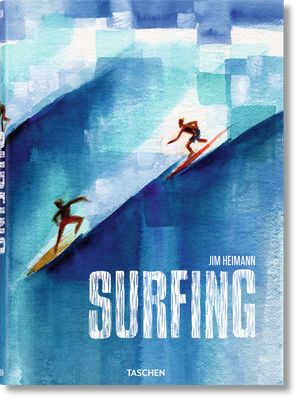
Book of the day > Surfing. 1778-2015 by Jim Heimann. Taschen. “This platinum tome is the most comprehensive visual history of surfing to date, marking a major cultural event as much as a publication. Following three and a half years of meticulous research, it brings together more than 900 images to chart the evolution of surfing as a sport, a lifestyle, and a philosophy.

The book is arranged into five chronological chapters, tracing surfing culture from the first recorded European contact in 1778 by Captain James Cook to the global and multi-platform phenomenon of today. Utilizing institutions, collections, and photographic archives from around the world, and with accompanying essays by the world’s top surf journalists, it celebrates the sport on and off the water, as a community of 20 million practitioners and countless more devotees, and as a leading influence on fashion, film, art, and music.

An unrivaled tribute to the breadth, complexity, and richness of surfing, this book is a must-have for any serious player on the surfing scene and anybody who aspires to the surfing lifestyle. As one surfing scribe has declared, “There has never been a book like this, and there will never be another one again.”


Book of the Day Posted Feb 25, 2016

Book of the day > Dzama / Pettibon

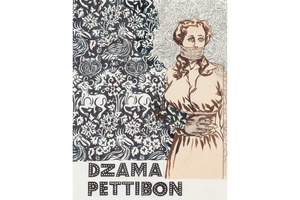
Book of the day > Dzama / Pettibon. David Zwirner Books. “Raymond Pettibon has been making zines since he graduated from UCLA in the late seventies, but he has rarely collaborated as he did with Marcel Dzama on Dzama / Pettibon. After meeting at David Zwirner Books in 2015 to discuss possible projects, the two artists began to embark on their shared endeavor—something that would develop into an exceptionally beautiful, exquisite corpse–inspired form. Pettibon and Dzama traded drawings and spent the rest of the summer reworking each other’s pieces—illustrating, collaging, accentuating, and writing—to make a brand new body of collaborative work. Months later, the unique pieces arrived back at David Zwirner Books where they were photographed and arranged in zine form in close collaboration with both artists.” 

Book of the Day Posted Feb 24, 2016

Book of the day > Concordia by Jonathan Danko Kielkowski

Book of the day > Concordia by Jonathan Danko Kielkowski. White Press Verlag.  “On the evening of January 13, 2012 one of the largest cruise ships in the Mediterranean wrecked just off the Tuscan island of Giglio . More than 4,000 people were evacuated in the course, 32 lost their lives. The cause of the disaster qualifies human error. The images of a tilted luxury liner have gone around the world, in total they peddle the idea of ​​a giant whale stranded. The sinking of the Costa Concordia, which occurred almost exactly 100 years after the Titanic, is often interpreted as a portent for the ongoing European crisis.” Drawn to the wreckage, photographer Jonathan Danko Kielkowski swam out to it under the cover of darkness to take pictures: “The wrecked Cruise Ship is visible and attracts me like a magnet, so I finally venture to swim across. Against all odds, I find the shipwreck freely accessible — neither fences nor security personnel! Rather, the doors are open, lights are turned on, no man can be seen—nothing in the way.”


more