Book of the Day Posted May 27, 2020

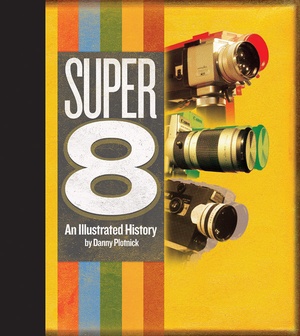
Book of the Day > Super 8: An Illustrated History

● Purchase ● Super 8: An Illustrated History is a coffee table art book showcasing the history of Super 8 filmmaking. In addition to featuring stunning photography documenting the sleek mid-century design of Super 8 cameras and projectors, the book also offers a detailed history of the beloved medium—one not only embraced by suburban dads, the target audience of the format, but by the art world, punk rockers, and ultimately popular culture. Filmmakers who got their start in Super 8 include, Robert Zemeckis, Jim Jarmusch, Todd Haynes, Sam Raimi, Wes Anderson, and Alex Gibney. Thanks in part to a renewed interest in analog technologies, Kodak will be bringing a new Super 8 camera to market in 2019, their first new camera to roll off the assembly line in over thirty years.


Super 8 also features interviews from filmmakers who got their start in Super 8 and individuals who were instrumental in the development of the medium. Interviews include filmmakers Richard Linklater (Slacker, Boyhood, Dazed and Confused), Dave Markey (1991: The Year Punk Broke), Rocky Schenk (music videos for Adele, Devo, Nick Cave, The Cramps, Robert Plant), James Mackay on Derek Jarman (Last of England, Jubilee), Lenny Lipton (The Super 8 Book), James Nares (Rome ’78), G.B. Jones (The Lollipop Generation), Bruce LaBruce (Hustler White, The Misandrists), Peggy Ahwesh (Martina's Playhouse), Paul Sheptow (Super-8 Filmmaker magazine), Ed Sayers (The Straight 8 Film Festival), Melinda Stone (Super Super 8 Film Festival), Jonathan Tyman (Ann Arbor 8mm Film Festival), Norwood Cheek (Flicker zine and screening series), Martha Colburn, Narcisa Hirsch, slit, Matthias Müller, John Porter, and Karissa Hahn. On the technical front, the book features interviews with Roland Zavada (Kodak), Bob Doyle (Super8 Sound), Phil Vigeant (Pro8mm), Frank Bruinsma (Super8 Reversal Lab), and Tommy Madsen (Logmar Camera Solutions).


Book of the Day Posted May 22, 2020

Book of the day > The Way We Walk by Jill Hoffman-Kowal

●Purchase here● From the co-founder of Target Video and the host of The Spirit Of Punk radio show comes over 100 pages of photos from the birth of the San Francisco punk scene, Los Angeles and a dash of NYC spanning 1977-1980. Many never seen before. Featuring The Mutants, The Cramps, Crime, The Screamers, The Zeros, Dils and more.
Book of the Day Posted May 20, 2020

Book of the Day > Claudia Andujar: The Yanomami Struggle

● Purchase ● This book is published to accompany “Claudia Andujar, The Yanomami Struggle” at the Fondation Cartier pour l’art contemporain in Paris, one of the most ambitious exhibitions devoted to the Brazilian photographer. Since the 1970s, Claudia Andujar has dedicated her life to photography and the protection of the Yanomami Indians, one of the largest Amerindian communities in the Brazilian Amazon. Claudia Andujar features over 200 black-and-white and color photographs, historical documents, and drawings produced by Yanomami artists. The fruit of several years’ research into the photographer’s archives, this exhibition catalog reflects the two inseparable aspects of Andujar’s approach: aesthetic and political. This catalog also shows Andujar’s significant contribution to art photography and the essential role she has played in the defense of Yanomami rights and the forest where they live.
Book of the Day Posted May 19, 2020

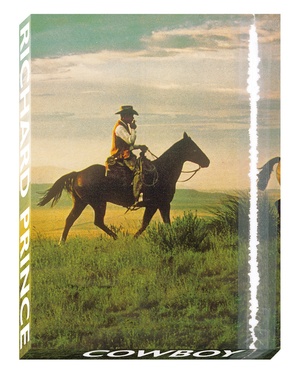
Book of the Day > Richard Prince: COWBOY

● Purchase ● A visually stunning compilation of Richard Prince’s 40-year-long project of examining the cowboy as an American symbol.
 
In the mid-1970s, Richard Prince was an aspiring painter working in Time Inc.’s tear sheet department clipping texts for magazine writers. After he removed the articles, he was left with advertisements: glossy pictures of commodities, models, and other objects of desire. He began to re-photograph the advertisements, cropping and enlarging them, and selling the artworks as his own. Prince paid particular attention to the motif of the cowboy, often depicted in advertisements for Marlboro cigarettes. He had an explosive effect on the art world, provoking lawsuits and setting auction records for contemporary photography. More recently, he has revisited copies of TIME from the 1980s and 90s using contemporary technology to produce a new series of work, extending his preoccupation with the cowboy in the era of Instagram to demonstrate that the stakes around originality, appropriation, and truth in advertising are as high as ever. This book showcases how Prince has mined the mythological American West within the artwork he produced during the last four decades. Each chapter contains a brief introduction, followed by artwork by Prince, and concludes with a section of related ephemera, relics, and fragments that aid in contextualizing Prince’s work. Once again challenging the conventional limits of photography, Prince is reigniting the debate he sparked forty years ago through the lens of cowboys and the West.
Book of the Day Posted May 15, 2020

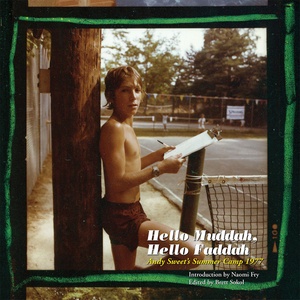
Book of the Day > Hello Muddah, Hello Faddah: Andy Sweet's Summer Camp 1977

● Purchase ● The golden days of tube socks, bunk beds, marshmallows and first crushes: 1970s summer camp, from the photographer behind Shtetl in the Sun


A companion volume to Shtetl in the Sun, Andy Sweet's love letter to the colorful Jewish community of late 1970s South Beach, Hello Muddah, Hello Faddah chronicles the summer of 1977 at Camp Mountain Lake, serving up a knowing portrait of the era's fashion, pop culture and frank expressions of adolescent sexuality.


Set against the cherished rituals of camp life—from the parade of trunks as 300 campers arrive at Mountain Lake's rural North Carolina setting to the end-of-August Dionysian frenzy of "Color War"—Sweet's photos tell a classic coming-of-age story, one full of awkward crushes, intense friendships and the kind of deep truths that emerge over late-night, campfire-toasted marshmallows.


As the camp's photography instructor and one of its counselors, Sweet brings an intimate familiarity to his subject, capturing the rhythms of the camp's daily life through both posed compositions and spontaneous images. By turns nostalgic, poignant and laugh-out-loud funny, this collection includes a foreword by award-winning Miami arts journalist Brett Sokol and an introductory essay by New Yorker staff writer Naomi Fry.

Book of the Day Posted May 14, 2020

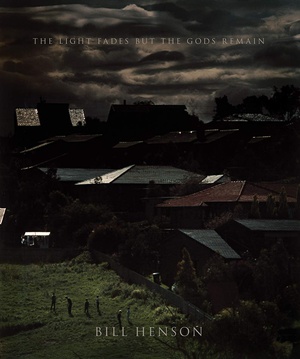
Book of the Day > Bill Henson: The Light Fades but the Gods Remain

● Purchase ● Over thirty years have passed since Bill Henson made his iconic Untitled 1985/86 series. These mesmerizing photographs cast a hazy procession of people and places in suburbia, interspersed with dreamlike vignettes of Egyptian structures.
 
Now, Henson revisits his home suburb to create new work. While these photographs return to the same cul-de-sacs as the Untitled series, they show an environment that appears to have slipped out of linear time. Henson’s new images are sumptuous and resplendent in their grandeur, offering a view of what is just down the street, but seems to come from another age. Together, the two series provide a glimpse into Henson’s brilliant mind as he ponders the passing of time.
 
The Light Fades but the Gods Remain, celebrates an extraordinary artist at two stages in his career. Casting suburbia in an entirely new light, this publication is a captivating meditation on growing up.
Book of the Day Posted May 13, 2020

Book of the Day > Dorothea Lange: Words & Pictures

● Purchase ● Toward the end of her life, Dorothea Lange reflected, “All photographs—not only those that are so-called ‘documentary’... can be fortified by words.” Though Lange's career is widely heralded, this connection between words and pictures has received scant attention. A committed social observer, Lange paid sharp attention to the human condition, conveying stories of everyday life through her photographs and the voices they drew in. Published in conjunction with the first major MoMA exhibition of Lange’s in 50 years, Dorothea Lange: Words & Pictures brings fresh attention to iconic works from the collection together with lesser-known photographs—from early street photography to projects on the criminal justice system. The work’s complex relationships to words show Lange’s interest in art’s power to deliver public awareness and to connect to intimate narratives in the world.
 
Presenting Lange’s work in its diverse contexts—photobooks, Depression-era government reports, newspapers, magazines, poems—along with the voices of contemporary artists, writers and thinkers, the book offers a nuanced understanding of Lange’s career, and new means for considering words and pictures today. An introductory essay by curator Sarah Hermanson Meister is followed by sections organized according to “words” from a range of historical contexts: Lange’s landmark photobook An American Exodus, Life and Aperture magazines, an illustrated guide to minimize racism in jury trials, and many more. These contexts are punctuated with original contributions from a distinguished group of contemporary writers, artists and critical thinkers, including Julie Ault, Kimberly Juanita Brown, River Encalada Bullock, Sam Contis, Jennifer Greenhill, Lauren Kroiz, Sally Mann, Sandra Phillips, Wendy Red Star, Christina Sharpe, Rebecca Solnit, Robert Slifkin and Tess Taylor.


Book of the Day Posted May 12, 2020

Book of the Day > The adidas Archive. The Footwear Collection.

● Purchase ● 100 years ago the brothers Adolf ("Adi") and Rudolf Dassler made their first pair of sports shoes. Hundreds of groundbreaking designs, epic moments, and star-studded collabs later, this book presents the first visual review of the adidas shoe through more than 350 models including never-before-seen prototypes and one-of-a-kind originals.
 
To further develop and tailor his products to athletes’ specific needs, Dassler asked them to return their worn footwear when no longer needed, with all the shoes eventually ending up in his attic (to this day, many athletes return their shoes to adidas, often as a thank you after winning a title or breaking a world record). This collection now makes up the "adidas archive", one of the largest, if not the largest archive of any sports goods manufacturer in the world—which photographers Christian Habermeier and Sebastian Jäger have been visually documenting in extreme detail for years.
 
Shot using the highest reproduction techniques, these images reveal the fine details as much as the stains, the tears, the repair tape, the grass smudges, the faded autographs. It’s all here, unmanipulated and captured in extremely high resolution—and with it comes to light the personal stories of each individual wearer. We encounter the shoes worn by West Germany’s football team during its “miraculous” 1954 World Cup win and those worn by Kathrine Switzer when she ran the Boston Marathon in 1967, before women were officially allowed to compete; custom models for stars from Madonna to Lionel Messi; collabs with the likes of Kanye West, Pharrell Williams, Raf Simons, Stella McCartney, Parley for the Oceans or Yohji Yamamoto; as well as the brand’s trailblazing techniques and materials, like its pioneering use of plastic waste that is intercepted from beaches and coastal communities.
 
Accompanied by a foreword by designer Jacques Chassaing and expert texts, each picture tells us the why and the how, but also conveys the driving force behind adidas. What we discover goes beyond mere design; in the end, these are just shoes, worn out by their users who have loved them—but they are also first-hand witnesses of our sports, design, and culture history, from the beginnings of the Dassler brothers and the founding of adidas until today.
 
Book of the Day Posted May 11, 2020

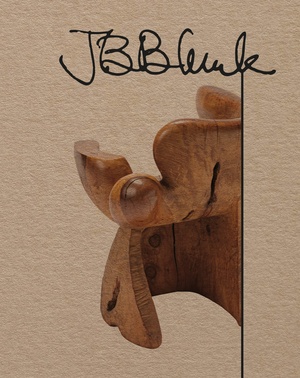
Book of the Day > JB Blunk

● Purchase ● The first survey of the ceramics and sculptures of beloved Californian artist JB Blunk, in a handsome foil-stamped hardcover volume


This is the first publication to explore the entire oeuvre of the great American sculptor JB Blunk, with previously unseen examples of his work in stone, clay, painting and jewelry. The design beautifully combines archival images of Blunk’s work in situ, and his studio, with color plates of newly photographed pieces. In an essay, Lucy R. Lippard discusses Blunk’s reverence for ancient art and places, while Smithsonian Curator of Ceramics Louise Allison Cort details Blunk’s formative years in Japan. Glenn Adamson, Senior Scholar at the Yale Center for British Art, contributes an essay that explores the essence of Blunk himself along with his artwork.


Blunk maintained a Midwestern sensibility of hard work and plainspokenness throughout his career, with little regard for the distinction between art, craft and design. Rather, he was guided by the materials with which he worked to create large sculptural pieces that seem to exude their own powerful energy unique to organic matter.
 

Book of the Day Posted May 08, 2020

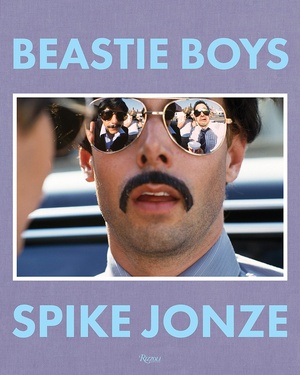
Book of the Day > Beastie Boys by Spike Jonze

● Purchase ● The first book of photography to be published by the Academy Award-winning film director and photographer Spike Jonze. Will appeal to every fan of Beastie Boys and golden-era hip hop, as well as photography and Spike Jonze's own focused audiences.
 
Spike Jonze and Beastie Boys met for the first time in Los Angeles in 1991, when Jonze went out to photograph the band for the cover of Dirt magazine. A connection formed between the three MCs and the young photographer, which has lasted throughout their careers.
 
Almost thirty years later--published to coincide with the release on Apple+ of a new documentary, Beastie Boys Story--this book collects for the first time more than two hundred of Spike Jonze's personal photographs of his time spent with the group. Edited and with an afterword by Jonze, and including new writing by Mike Diamond and Adam Horovitz themselves, this book shows an intimate look at the greatest act of the hip-hop generation in their truest colors as only a close friend could see them--from performing live onstage to writing together at Mike's apartment; getting into character for a video to dressing up as old men to hit the basketball court; recording music in the studio to goofing around on the streets of New York.
 
From the music video for "Sabotage" to the cover of the Sounds of Science album, Spike Jonze is responsible for some of the most iconic images of the band ever made. But here, the emphasis is on the candid, the unexpected, and the real--just pictures of friends who like making stuff together.


more